February 19, 2026
Moving to Cobb County from Out of State: The Complete Relocation Guide
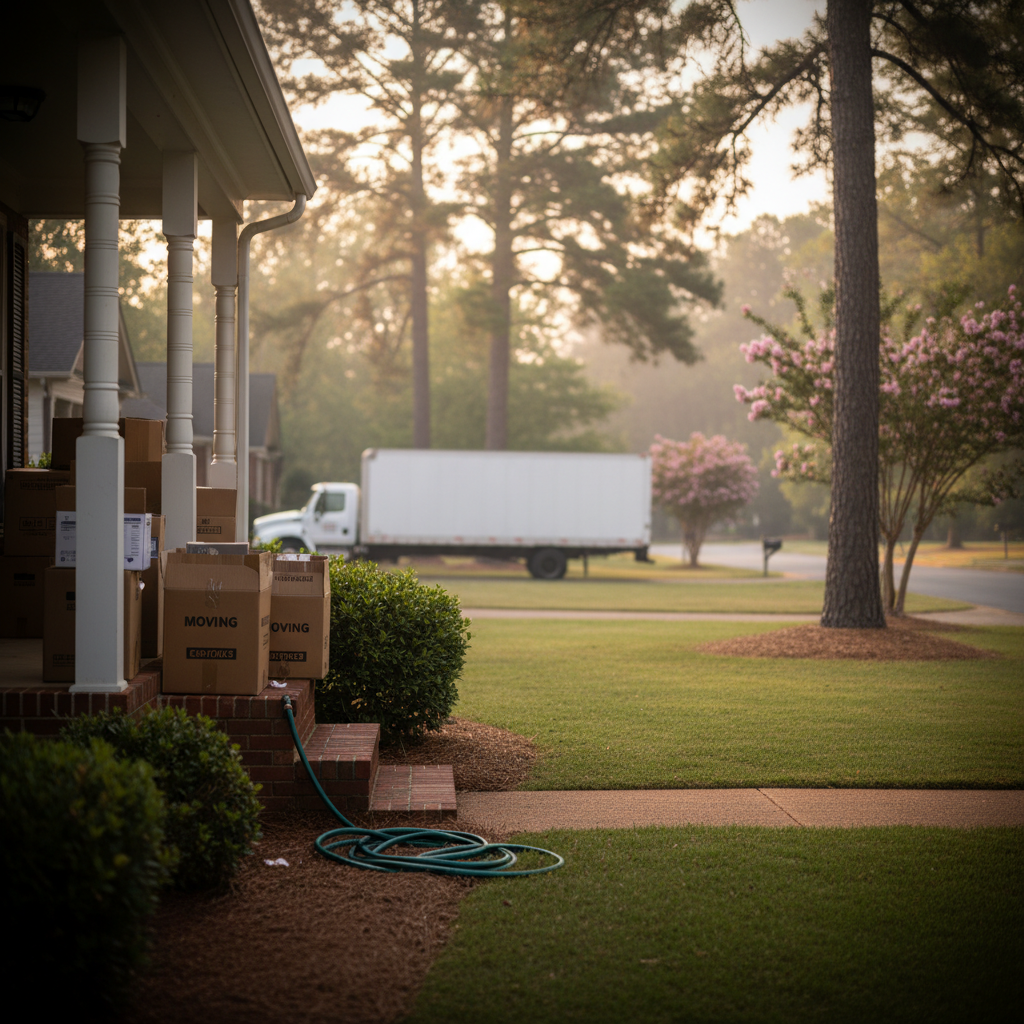
Your New Chapter Starts in Cobb County
Every week I get calls from people relocating to the Atlanta metro area from places like New York, Chicago, Los Angeles, and Washington D.C. They have done the math. They have looked at the cost-of-living numbers. They have watched the quality-of-life gap widen between their current city and the Southeast. And they have made a decision — they are moving to Georgia.
Cobb County is where a large share of them land, and it is easy to see why. You get excellent schools, access to Atlanta’s economy and culture, reasonable home prices, a low property tax burden, and a genuine sense of community that is hard to find in most major metros. I have helped dozens of out-of-state buyers navigate this move, and I want to share everything I have learned to make your relocation as smooth as possible.
If you are actively searching for your next home and want a local expert in your corner, give me a call — I work with out-of-state buyers regularly and can walk you through every step of the process, including virtual tours and remote closings.
Why Cobb County? The Case for Making It Your Home
Location and Access
Cobb County sits on the northwestern edge of metro Atlanta, directly adjacent to the city limits. That positioning is everything. You are 15 minutes from Midtown Atlanta, 20 minutes from Downtown, and about 30 minutes from Hartsfield-Jackson Atlanta International Airport — the busiest airport in the world. For professionals who travel frequently, that airport access alone changes the quality-of-life calculation dramatically compared to living in a distant suburb.
The county is bisected by I-75 and flanked by I-285 (the Perimeter), giving you multiple routes into the city. I-575 connects the northern parts of the county toward Cherokee County and beyond. Whether you are commuting to Buckhead, the Perimeter business district, or working remotely with occasional office days, the location puts you in an enviable spot.
Cost of Living vs. Major Metros
This is where Cobb County truly shines for out-of-state movers. Let me give you some honest comparisons:
- New York City: Housing in Cobb County costs roughly 60-70% less than comparable NYC metro properties. A home that would run $1.2M in northern New Jersey can be found in the $350K-$500K range in Kennesaw or Marietta.
- Chicago: Similar savings apply, particularly compared to suburban Cook County. Property taxes in Cobb County are dramatically lower — more on that below.
- Los Angeles: Cobb County homes are roughly 50-65% the price of comparable LA metro homes, with significantly lower ongoing costs including insurance and taxes.
- Washington D.C.: Northern Virginia and Maryland suburbs command massive premiums. Cobb County’s median home price of $383,717 buys you a home that would list at $650K+ in the D.C. suburbs.
The Kennesaw cost-of-living index sits at 96 — that is 4% below the national average. Factor in Georgia’s favorable tax structure and the real-world financial advantage of this move becomes clear very quickly.
Georgia’s Tax Advantages for New Residents
I cannot overstate how significant Georgia’s tax environment is for people relocating from high-tax states. This is one of the most financially impactful aspects of this move.
No State Income Tax on Retirement Income
Georgia does not tax Social Security income. It also offers a $65,000 per person exclusion on other retirement income (pensions, 401(k) distributions, IRA withdrawals) for residents age 65 and older. If you are a retiree moving from Illinois, New York, or California where retirement income is taxed heavily, moving to Georgia can mean thousands of dollars back in your pocket every year.
Reasonable Property Taxes
Cobb County’s effective property tax rate is 0.68% — below the Georgia state average of 0.74% and well below the national average of 1.1%. On a $383,717 median home, you are looking at roughly $2,609 per year in property taxes. Compare that to comparable homes in New Jersey (often $8,000-$12,000+), Illinois (often $6,000-$10,000+), or Connecticut, and the savings are immediate and ongoing.
The homestead exemption reduces the taxable value of your primary residence by $10,000 at the county level. There are additional exemptions available for seniors, veterans, and disabled homeowners. One important note: you must file for homestead exemption by April 1 of the year following your purchase. Do not miss this deadline — I remind all of my buyers of this requirement at closing.
No Estate Tax
Georgia has no state estate tax. For families with multi-generational wealth transfer goals, this matters enormously compared to states that impose estate taxes on amounts above relatively low thresholds.
Neighborhoods Overview — Finding Your Fit in Cobb County
Cobb County is not a monolith. It contains several distinct cities and communities, each with its own personality and price point. Here is a quick orientation:
Marietta
The county seat and largest city in Cobb. Marietta offers historic charm, a walkable downtown square, diverse housing stock ranging from Victorian-era homes to modern construction, and easy access to everything in the county. It is an excellent all-around choice, particularly for buyers who want character and walkability. Read more in the Marietta living guide.
Kennesaw
Kennesaw is my most popular market for out-of-state relocators. With a median listing price around $459K, it offers excellent value relative to quality of life. The schools are strong, the Kennesaw Mountain National Battlefield Park is a world-class outdoor amenity in the backyard, and the downtown is thriving. If you are moving with a family, Kennesaw should be at the top of your list.
Smyrna and Vinings
Smyrna and Vinings sit closest to Atlanta’s city limits and offer a more urban-adjacent feel. Vinings in particular has upscale homes, walkable retail, and some of the highest appreciation in the county. For buyers who want to stay close to Atlanta proper without paying intown prices, this area delivers. See the Smyrna/Vinings guide for more detail.
Acworth
On the northern edge of the county, Acworth offers some of the most affordable entry points in Cobb while also providing access to Lake Allatoona — one of the premier recreational lakes in Georgia. If waterfront lifestyle and value are priorities, read the Acworth lake city guide.
East Cobb vs. West Cobb
East Cobb is widely known as one of the top family destinations in the entire Atlanta metro. Excellent schools, established neighborhoods, and high owner-occupancy rates make it highly desirable and commensurately priced. West Cobb is more affordable and offers newer construction along several active development corridors. See the East Cobb vs. West Cobb comparison for a detailed breakdown.
Powder Springs
Powder Springs on the western edge of the county is one of the most affordable and fastest-appreciating areas I work in. Newer developments, good schools, and a strong community feel at prices below the county median. Full details in the Powder Springs guide.
Schools and Education
This is a top-five factor for most families relocating with children. Cobb County School District serves the vast majority of the county and consistently ranks in the top tier of Georgia districts. With over 110,000 students, it is one of the largest districts in the state, which means ample resources, extensive extracurricular programming, and competitive athletics.
Key highlights:
- Several schools in the district earn Georgia Department of Education Star School designations for exceptional performance
- The district offers International Baccalaureate programs, magnet programs, and dual-enrollment options with Kennesaw State University
- Marietta City Schools operates as a separate district within the county and has its own strong reputation
- High school options include Walton High School in East Cobb, consistently ranked one of the best high schools in Georgia
- Harrison High School, Kell High School, and North Cobb High School all have strong academic and athletic programs
I strongly recommend that families research school zones carefully during their home search — zone boundaries within the county can vary significantly even within the same city. For a deep dive, read the best schools in Cobb County guide.
Healthcare in Cobb County
Quality healthcare access is a critical consideration when relocating, especially for families and older adults. Cobb County is well-served by the WellStar Health System, which operates several major facilities in the area:
- WellStar Kennestone Hospital in Marietta is a regional medical center with Level II Trauma Center designation, serving as the flagship facility for the county
- WellStar Cobb Hospital in Austell provides additional acute care capacity in the western part of the county
- WellStar Windy Hill Hospital in Marietta offers inpatient rehabilitation and specialized services
- Numerous WellStar urgent care centers, physician offices, and specialty clinics are distributed throughout the county for routine care
In addition to WellStar, Piedmont Healthcare has a growing presence in the Atlanta metro with facilities accessible from Cobb County. Children’s Healthcare of Atlanta has specialist offices in Cobb for pediatric specialty care.
For mental health services, telehealth options have expanded significantly, and Cobb County has a growing network of community mental health resources. If you are moving with specific healthcare needs, I am happy to connect you with local resources as part of my relocation support.
Climate — What to Expect in Georgia
This is something I always walk out-of-state buyers through because the Georgia climate is genuinely distinctive and not what most people from the Northeast or Midwest expect.
Mild Winters
Cobb County winters are mild compared to most of the country. Average January highs are in the low-to-mid 50s, and snowfall is rare — typically one or two minor events per year, if that. True heavy snow accumulations happen perhaps once every few years. The tradeoff is that when ice or snow does hit, the region is not well-equipped to handle it. Ice storms are more of a concern than snowstorms — a thin glaze of ice on roads that lack salt trucks can cause significant disruptions for a day or two. Stock your pantry and have patience during these events.
Long, Warm Summers
Georgia summers are long, humid, and hot. July and August highs regularly reach 90-95 degrees with humidity that makes it feel warmer. Most outdoor activity during summer happens in the early morning or evening. The good news is that air conditioning is universal and homes in Cobb County are built for this climate — you will not be retrofitting a 100-year-old house for Georgia summers.
Beautiful Springs and Falls
This is what keeps people here. Spring in Cobb County is spectacular — dogwood blooms, mild temperatures in the 60s and 70s, and greenery everywhere. Fall brings crisp air and foliage that, while not matching New England, is genuinely beautiful, particularly around Kennesaw Mountain and the northern parts of the county.
Severe Weather
Georgia does experience thunderstorms regularly, particularly in spring and summer. Tornadoes are possible but less common than in the traditional Midwest tornado belt. If you are accustomed to severe weather preparedness, the same principles apply here — monitor weather alerts and have a plan.
Your First 30 Days in Georgia — The Practical Checklist
Once you close on your home and get settled in, there are important administrative tasks that are time-sensitive. I put this checklist together based on what my clients have needed to navigate:
Driver’s License and ID
- Georgia requires you to transfer your out-of-state license within 30 days of establishing residency
- Visit a Georgia DDS (Department of Driver Services) office — the closest Cobb County location is in Marietta on Whitlock Avenue
- Bring your current out-of-state license, proof of Georgia residency (utility bill or lease/closing documents), Social Security card or proof of SSN, and your vehicle insurance information
- Make an appointment online at dds.georgia.gov to avoid long wait times
Vehicle Registration
- Georgia vehicle registration must be completed within 30 days of establishing residency
- You will need to obtain a Georgia emissions test first — Georgia requires annual emissions testing for vehicles in Cobb County and most metro Atlanta counties. Testing stations are conveniently located throughout the county and results are quick.
- After passing emissions, visit the Cobb County Tax Commissioner’s office to register your vehicle
- Be prepared for Georgia’s Ad Valorem Tax replacement — Georgia eliminated the annual ad valorem tax on vehicles and replaced it with a one-time Title Ad Valorem Tax (TAVT) paid at the time of first registration in the state. The current rate is 7% of the vehicle’s fair market value.
Voter Registration
- Register to vote at sos.georgia.gov online or at the DDS office when transferring your license
- Cobb County is part of Georgia’s statewide election system — registration deadlines vary by election
Utilities Setup
- Electricity: Most of Cobb County is served by either Georgia Power (georgiapower.com) or Cobb EMC (cobbemc.com), depending on your neighborhood. Your real estate agent or closing attorney can tell you which provider serves your specific address.
- Natural Gas: Atlanta Gas Light handles gas distribution throughout the county, but you choose your gas marketer (SCANA Energy, Gas South, and others compete for your service)
- Water and Sewer: Most of Cobb County is served by Cobb County Water System (cobbcounty.org/water). Set up service before or at move-in.
- Internet: Comcast Xfinity is the dominant cable provider in Cobb County. AT&T Fiber is available in many areas and is worth checking — fiber speeds are excellent. Google Fiber is available in some communities. Check address availability before committing.
- Trash: Cobb County offers residential sanitation service through the county — contact Cobb County Sanitation to establish your service.
Homestead Exemption
- File for your homestead exemption by April 1 of the year following your home purchase
- This is done through the Cobb County Tax Assessor’s office — you can file online at cobbtax.org
- The basic exemption reduces your taxable value by $10,000. Additional exemptions may be available based on age, disability, or veteran status.
- Do not let this deadline pass — I follow up with all of my clients about this
Finding Doctors and Dentists
- WellStar MyChart (wellstar.org) allows you to find in-network primary care physicians and specialists within the WellStar system
- Georgia Composite Medical Board (medicalboard.georgia.gov) allows you to verify physician credentials
- Ask neighbors and community Facebook groups for dentist recommendations — local knowledge is gold here
- Urgent care: WellStar has multiple urgent care locations throughout Cobb County for non-emergency needs
Schools Enrollment
- Contact Cobb County School District (cobbk12.org) for enrollment procedures if you have school-age children
- You will need proof of residency, immunization records, and prior school records
- Enrollment typically needs to happen before the school year begins, but mid-year enrollment is also supported
Practical Tips From Someone Who Has Helped Dozens Make This Move
A few things I have learned from walking clients through this process:
On traffic: I-75 and I-285 can be brutal during peak hours. If your schedule has any flexibility, leaving before 6:30 AM or after 9:30 AM makes an enormous difference. Learn the alternate routes through your neighborhood early. Read my commuting from Kennesaw to Atlanta guide for detailed route analysis.
On the outdoor lifestyle: Cobb County’s parks and trails are genuinely world-class for a suburban area. Kennesaw Mountain, Silver Comet Trail, Chattahoochee River National Recreation Area — get outside and explore early. It changes how you feel about the area quickly.
On community involvement: Join your local neighborhood association, HOA, or community Facebook group within the first month. These networks are invaluable for finding contractors, doctors, events, and just getting to know your neighbors.
On the restaurant scene: Cobb County has an excellent and growing culinary scene. Do not let the suburban setting fool you — particularly in Smyrna, Marietta, and the Kennesaw area, you will find genuinely outstanding food at prices that will feel remarkable compared to NYC or Chicago dining costs.
Let Me Help You Land in the Right Neighborhood
Relocating is one of the biggest decisions most families ever make, and the neighborhood you choose will shape your daily life for years. I work exclusively in Cobb County and have deep knowledge of every community, every school zone, every development corridor, and every market trend. I have helped clients move here from New York, California, Illinois, Colorado, Texas, and beyond — each situation is different, and I tailor my approach accordingly.
Whether you want to start with virtual tours, have questions about specific neighborhoods, or are ready to make an offer, I am here to help. Give me a call or shoot me a message — I would love to be your guide to Cobb County.
Frequently Asked Questions
How long does it take to transfer my Georgia driver’s license after moving?
You have 30 days from establishing Georgia residency to transfer your out-of-state license to a Georgia license. Make an appointment at a Georgia DDS office online to avoid long waits. Bring your current license, proof of Georgia residency (like your utility bill or closing documents), and your Social Security card.
Do I need an emissions test in Cobb County?
Yes. Cobb County is part of Georgia’s clean air program and requires annual emissions testing for most gasoline-powered vehicles. You will need to pass an emissions test before you can register your vehicle in Georgia for the first time. Testing is quick and inexpensive — usually under $25 — and stations are widely available throughout the county.
When do I file for homestead exemption and how does it work?
You must file for the homestead exemption by April 1 of the year following your home purchase. File through the Cobb County Tax Assessor’s office at cobbtax.org. The basic exemption reduces your home’s taxable assessed value by $10,000, which translates to a meaningful reduction in your annual tax bill. I remind all of my buyers about this deadline because missing it means waiting another full year.
How does Georgia’s property tax compare to my state?
Cobb County’s effective property tax rate is 0.68%, compared to a national average of about 1.1%. On a $383,717 home, that is roughly $2,609 per year. States like New Jersey (2.1%), Illinois (2.0%), and Connecticut (1.8%) have dramatically higher effective rates. The savings on property taxes alone can amount to thousands of dollars annually for buyers coming from high-tax states.
What utilities do I need to set up when I move into my Cobb County home?
You will need to set up electricity (Georgia Power or Cobb EMC depending on your address), natural gas if your home uses it (choose a marketer through Atlanta Gas Light), water and sewer (Cobb County Water System for most of the county), internet (Comcast Xfinity is most widely available; AT&T Fiber is excellent where available), and trash pickup through Cobb County Sanitation. I recommend having electricity and water set up before your move-in date so you are not dealing with those calls while boxes are being unloaded.